Finnish Customs enforces approximately 50 different import and export restrictions. Customs enforces them on behalf of 11 ministries and several different agencies, meaning that the range of Customs’ duties is very wide in comparison to other Finnish authorities. Due to the changed security environment and the effects of climate change, Finnish Customs must be more prepared than ever to take proactive measures and monitor changes in the operating environment more closely than before.
During 2025, African swine fever spread in Europe; we at Finnish Customs responded to the threat by intensifying the control on the import of meat products. The spread of African swine fever to Finland would be disastrous for Finnish pigs and pig farming. In addition, we noticed during the year that more shortcomings than before occurred in the import of pets. Preventing diseases, such as rabies that may be spread by pets, is a sensitive issue. If a pet does not meet all the requirements for entering the country, the pet must either be returned to its country of origin or be euthanised, which may seem unfair in individual cases. The rules are set down to protect our society, and we at Finnish Customs work to raise awareness and prevent unnecessary incidents.
During the year, new products on the market, such as Dubai chocolate and Labubu toys, became a familiar sight at Finnish Customs. Our product safety enforcement focuses on products that are widely used and consumed as well as products whose users are particularly vulnerable to different kinds of risks, such as children. In 2025, we detected dangerous products among sports and fitness equipment and foodstuffs, among other things.
The versatile role of Finnish Customs as a security authority is also reflected in its role as the national authority responsible for the Carbon Border Adjustment Mechanism (CBAM) of the EU. The CBAM seeks to ensure that the prices of goods imported into the EU better reflect the greenhouse gas emissions generated in their production that cause global warming. The transitional period for CBAM ended in 2025, and the production phase began on 1 January 2026, with its implementation planned in close cooperation with customers. The implementation schedule has been very tight, and our customers have done a significant amount of work to ensure that all the permits required for continuing imports are in order for products subject to the CBAM.
In this section, we will use examples to explain the role of Finnish Customs in more detail in preventing the spread of animal diseases, monitoring product safety and implementing the CBAM.
Our sustainability efforts
Finnish Customs monitored a total of 4,469 imported products in 2025. The enforcement focused on products that are widely used and consumed as well as products whose users are particularly vulnerable to various risks. For example, we checked approximately 80 sports and fitness products to see if they contained excessive amounts of chemicals harmful to health. Thirteen sports or fitness equipment products or their packages were found to be non-compliant due to excessive levels of substances harmful to health. Ten products contained excessive levels of phthalates, three contained excessive levels of PAH compounds and two products contained too much lead.
Finnish Customs ensures that new products entering the market are safe and that they comply with requirements. In 2025, we monitored trending toys, such as Labubus, which are also popular among adults. Through testing, we ensure that toys do not contain small parts that could pose a choking hazard or plastic softeners, phthalates, nickel or other heavy metals. The Labubus examined by Finnish Customs were in compliance with the regulations in this respect.
We also tested samples of Dubai chocolate containing pistachios, which have become very popular, for aflatoxin produced by mould. Pistachios are a high-risk food in this regard, but no harmful compounds produced by mould were found in the Dubai chocolates imported to Finland. Elsewhere in Europe, similar sweets were withdrawn from the market due to aflatoxins. Finnish Customs also tested the chocolate for its microbiological quality and other harmful substances caused by mould. The only issues found by Customs were minor deficiencies in the product packaging labels.
In total, Finnish Customs inspected 2,901 foods or food contact materials last year, of which 264 were rejected. Of those that were considered the most dangerous, 32 were subject to RASFF notifications. A total of 1,568 consumer goods were inspected and 171 were rejected, and 34 Safety Gate alerts were sent concerning the consumer goods that were deemed to be the most dangerous. The RASFF and Safety Gate alert systems are used to issue alerts about dangerous products in the EU so that authorities in different countries can remove the products from their own markets.
Read more
New robots and laboratory instruments speed up criminal investigations at Finnish Customs
African swine fever (ASF) is a highly dangerous animal disease that affects pigs. The virus that causes the disease spreads easily and survives well, for example in meat products. African swine fever has never been detected in Finland, but it is present in the Baltic countries and Russia, among other places. During 2025, the disease situation in the Baltic countries deteriorated, and the disease was also detected in wild boars in the Barcelona region in Spain. The spread of the disease to Finland would cause significant harm to animal welfare and pig farming in Finland as well as pork exports.
The spread of African swine fever and other harmful animal diseases is being combated through measures such as import bans. Private individuals are not allowed to bring any meat or dairy products with them from outside the EU. In addition, EU countries where African swine fever is present have restricted areas from which only a very limited amount of pork or wild boar meat or products containing them may be imported into Finland.
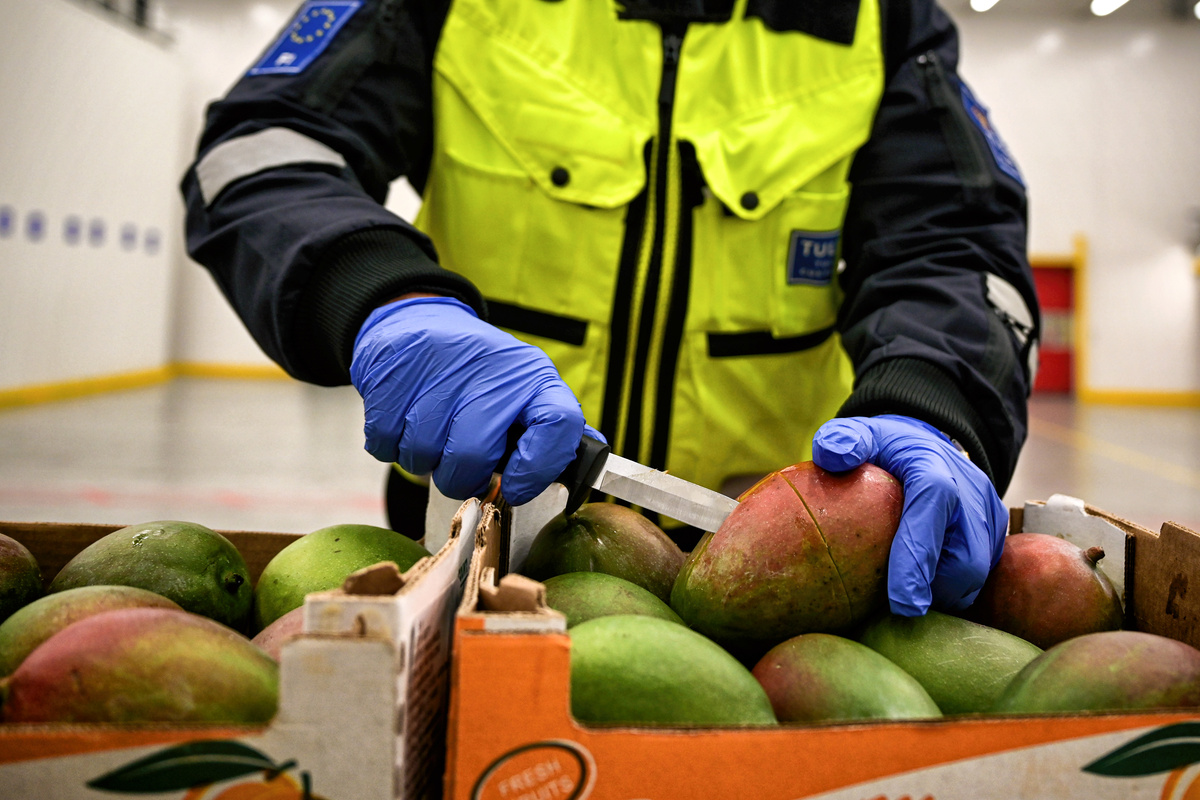
Finnish Customs enforces the restrictions on private imports of foodstuffs arriving from outside the EU and compliance with animal health regulations for imports arriving from EU countries. Food imports are monitored as part of normal customs control. In 2025, Finnish Customs also intensified its monitoring of meat product imports at the ports of Helsinki.
Finnish Customs employs two food dogs trained to search for meat and dairy products. In 2025, the food dogs found approximately 3,300 kilograms of prohibited meat and dairy products in total. In fact, prohibited souvenirs are discovered daily during customs control. Finnish Customs seizes the prohibited foodstuffs and disposes of them safely. Repeated or gross violations of the import ban may be punished.
The movement of pets is regulated by EU legislation. The requirements are intended to prevent the spread of dangerous animal diseases such as rabies and echinococcosis. Dogs, cats and ferrets must have an identification, i.e., a microchip, appropriate travel documents and a valid rabies vaccination. In addition, dogs must be treated to prevent echinococcosis. If the animal is imported from a country where there is a risk of rabies, a certificate of an acceptable rabies antibody titration test result is also required. Other pets, such as pet birds, are subject to their specific requirements.
The pet owner or importer is always responsible for complying with the requirements, and the requirements must be determined and taken care of well in advance of the trip. Information on the requirements for entering Finland is available on the websites of the Finnish Food Authority and Finnish Customs. The authorities of the destination country can provide information on the requirements for the destination.
Finnish Customs oversees the movement of pets from both EU countries and countries outside the EU. The commercial import of pets from outside the EU is monitored by the Finnish Food Authority. When arriving from outside the EU, pets must always be presented for inspection. When travelling from one EU country to another, the authorities may inspect pets and their documents, if necessary.
In 2025, Finnish Customs inspected 21,058 pets; of these, deficiencies were found in the movement of 399 animals. Both the number of animals inspected and the number of deficiencies increased significantly from the previous year (14,747 animals inspected, 291 deficiencies). If deficiencies are found during the inspection of a pet, the pet must either be returned to its country of origin or euthanised. In most cases, the pet is returned successfully and it can be brought back to Finland once the conditions for transfer are met. Approximately 10 pets are euthanised each year based on a decision by Finnish Customs.
The transitional period for the Carbon Border Adjustment Mechanism (CBAM) ended at the end of 2025. During the transitional period, EU importers were required to report the direct and indirect emissions from the manufacture of products manufactured outside the EU (iron, steel, aluminium, cement, fertilisers, and chemical products, as well as hydrogen and electricity). Starting from the beginning of 2026, an authorisation will be required for the import of CBAM goods if the operator imports more than 50 tonnes of CBAM goods per calendar year.
At the end of 2025, the European Parliament and the Council adopted legislative amendments aimed at reducing the administrative burden on businesses and public authorities. The changes will apply from 1 January 2026. The changes reduced the number of parties subject to reporting obligations, as the obligations related to the CBAM only apply to operators that import more than 50 tonnes of CBAM goods during a calendar year. The previous limit was EUR 150 per consignment. In addition, the new legislation clarified the annual reporting requirements and the acquisition of CBAM certificates subject to a fee.
In 2025, Finnish Customs informed customers about the CBAM, organised training courses and provided guidance on using the CBAM registry of the EU. Operators subject to the CBAM were informed of the forthcoming 50 ton threshold as well as the need to obtain an authorised CBAM declarant authorisation. Finnish Customs published CBAM data related to each company in the My Details service for its customers in order to reduce the administrative burden. The service can be used for example to check information on imported CBAM goods.
What is CBAM?
The Carbon Border Adjustment Mechanism (CBAM) is a new EU tool to prevent carbon emissions from being diverted out of the EU. The CBAM seeks to ensure that the prices of goods imported into the EU better reflect the greenhouse gas emissions generated in their production that cause global warming. Starting from 1 January 2026, goods imported into the EU will be subject to the same emissions-based fee as goods manufactured in the EU under the emissions trading scheme.
In practice, the CBAM creates an economic incentive system for manufacturers from non-EU countries as well as EU importers to reduce emissions from production processes. The CBAM creates a level playing field for manufacturers in the EU market and supplements the EU Emissions Trading System.
The CBAM is administered both nationally and at the EU level. The Commission develops legislation and cooperates with the competent authorities of the different Member States. The Ministry of Employment and the Economy as the steering ministry and Finnish Customs as the competent authority, are also involved in the development work